Pressure, Power & Progress
Drilling Down on Drillship Types

Introduction
When examining the merits of the offshore drilling market from an investment perspective today it is fairly clear where we stand from a supply & demand perspective, the shipyard bottlenecks, and overall economic considerations that comes from offshore field services providers requiring an adequate return on capital invested in new build vessel activity.
A core tenet of the offshore drilling bull thesis today is the inability to build new vessels at scale as demand continues to grind higher. Today, a 7th Generation newbuild would cost between $900M - $1B with the newest model 8th Generation vessels equaling $1.3B. The question I get asked often is why the cost difference in vessels? Why would one pay more for a 7th Generation vs 8th Generation vessel and if the service they are providing is a commoditized service, why would one pay more from a day rate point of view for those vessels?
One important distinction that needs to be made is the difference in the quality component of a drillship versus an Offshore Services Vessel (OSV). From the largest to the smallest OSV on the market there is no difference in the work that gets done. On the other hand, there are a multitude of vessel specs introduced by new generations of drillship that make offshore fields more economic and allow for a higher price to be paid for the vessel itself.
In this piece we will focus on Blowout Prevention (BOP), Mooring and Riser Technology, Dual Derrick, Hook loads, and what allows a vessel to work in harsh environment conditions.
Historical Overview
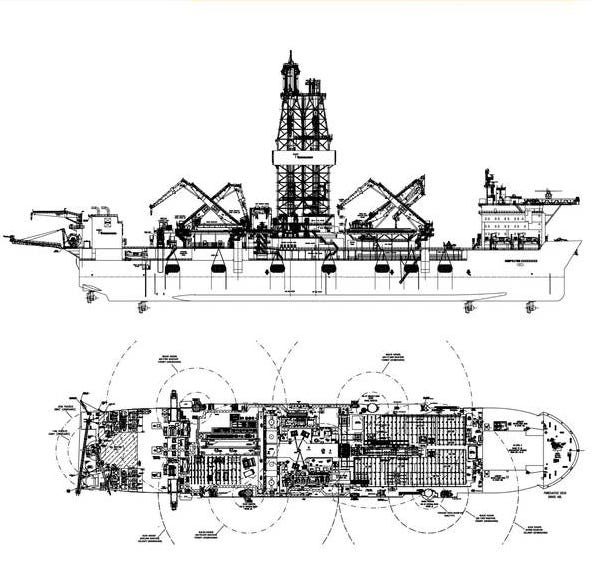
The first 6th generation ship was delivered in 2005-2006 and dominated the market through the early 2010s. One of the earliest models of 6th Generation vessels was Transocean’s Discoverer Clear Leader with 6th Generation offering the first dual derricking system and 15K blow out prevention systems.
At the end of the last oil bull market in 2014 7th Generation vessels were introduced that offered 15K BOP systems, higher hook loads of more than 2.5Mlbs and were optimized for water drilling depths of 12-40K. Finally, in 2022 and beyond 8th Generation vessels began deliveries and offer 20K PSI BOP systems, 3Mlbs of hook load, High-Pressure, High Temperature (HPHT) wells that could withstand 3.5-4Mlbs of tension capacity vs just 2.5Mlbs for the inferior 6th Gen.
Advances in drillship technology follow the same economic considerations other industries follow. As oil prices grind higher and supply expansion becomes necessary to meet world demand growth, there is an incentive to develop innovative technologies to make what was once uneconomic or merely unreachable able to be retrieved and developed at scale. The current 8th Generation model was brought about because of new fields discovered in regions like Brazil, Guyana or Namibia that are hundreds of miles offshore in deep and ultra deep-water environments.
Blowout Prevention
The main function of the BOP system is to seal, control, and monitor hydrocarbons in a well to prevent oil and gas or other fluids from escaping the well and into the water. The BOP system works in unison with the drilling mud column as a second barrier so that if the mud fails to control well pressure the BOP system provides a mechanical seal to contain hydrocarbons in the well.